Industry
Banking
Client
Lakeside
Services
Product Design
Date
August 2025
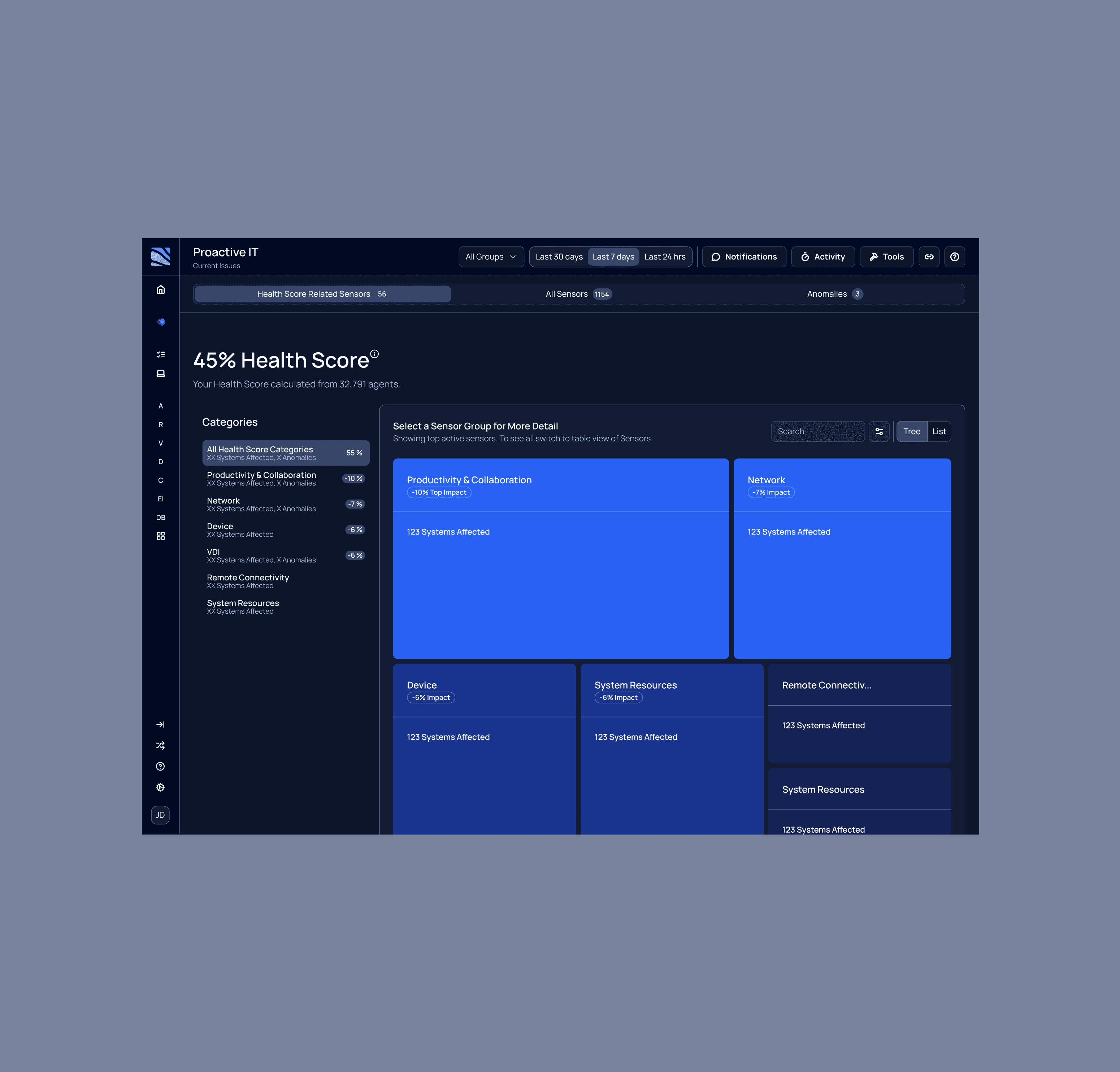
Lakeside Software builds tools that help large organizations detect and resolve IT issues.

Much like a car dashboard, Lakeside used 1,000s of sensors to give IT teams deep visibility into their EUC environments and surface system signals such as high CPU usage, application crashes, and disk failures.
This helps detect and resolve IT issues across thousands of employee devices — reducing downtime and help desk volume.
While some sensors identify root causes, many only surface symptoms — leaving IT specialists to interpret fragmented data and determine what actions to take.
Over a three-month engagement, our team redesigned the experience to transform overwhelming telemetry into a guided, trustworthy workflow that supports faster decision-making and clearer outcomes.
Despite its powerful data engine, the product experience worked against its users.
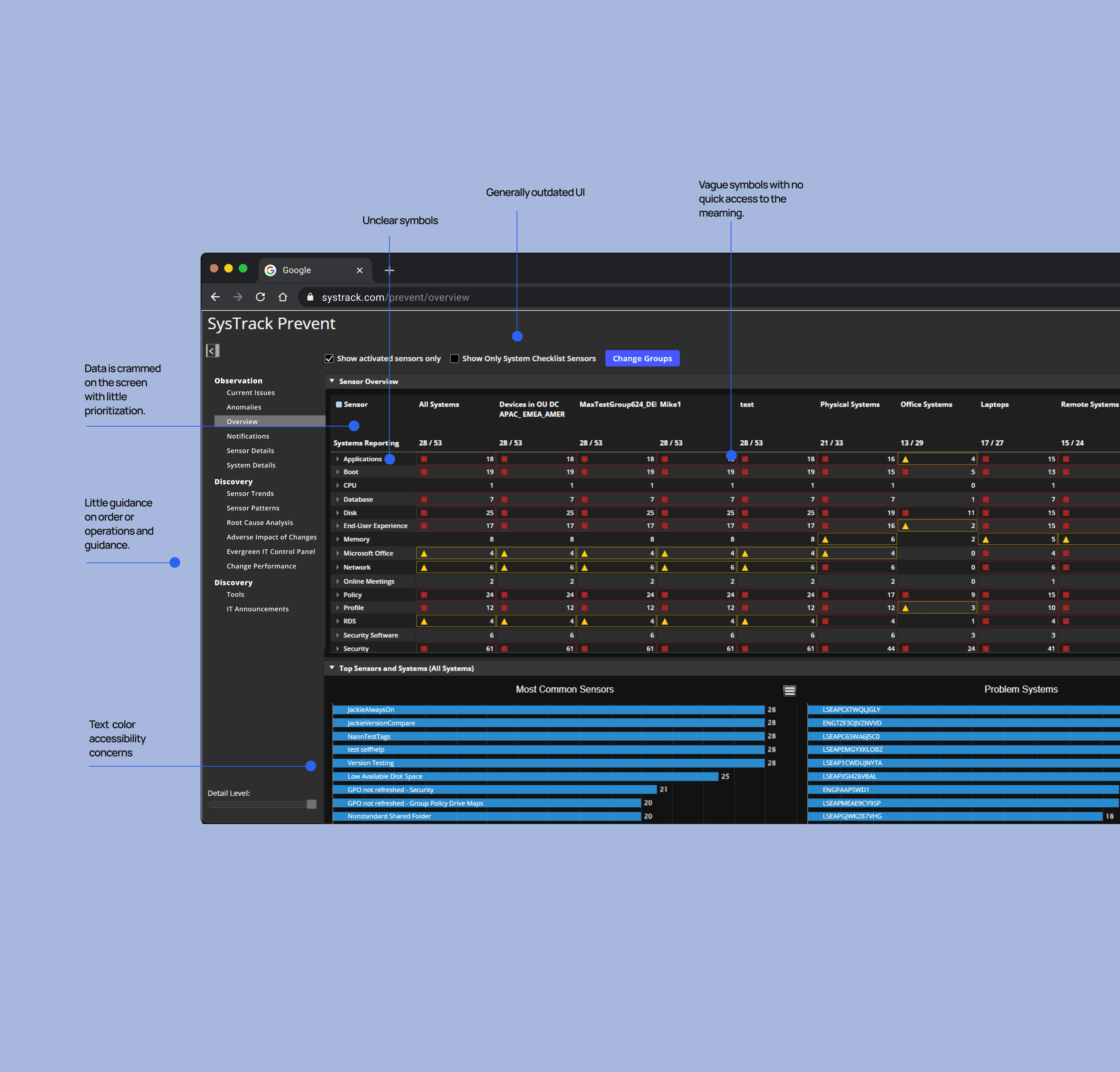
Wavering trust in accuracy: limited transparency into how health scores were calculated reduced confidence in the system.
Declining ROI for customers which contributed to churn among long-term clients.
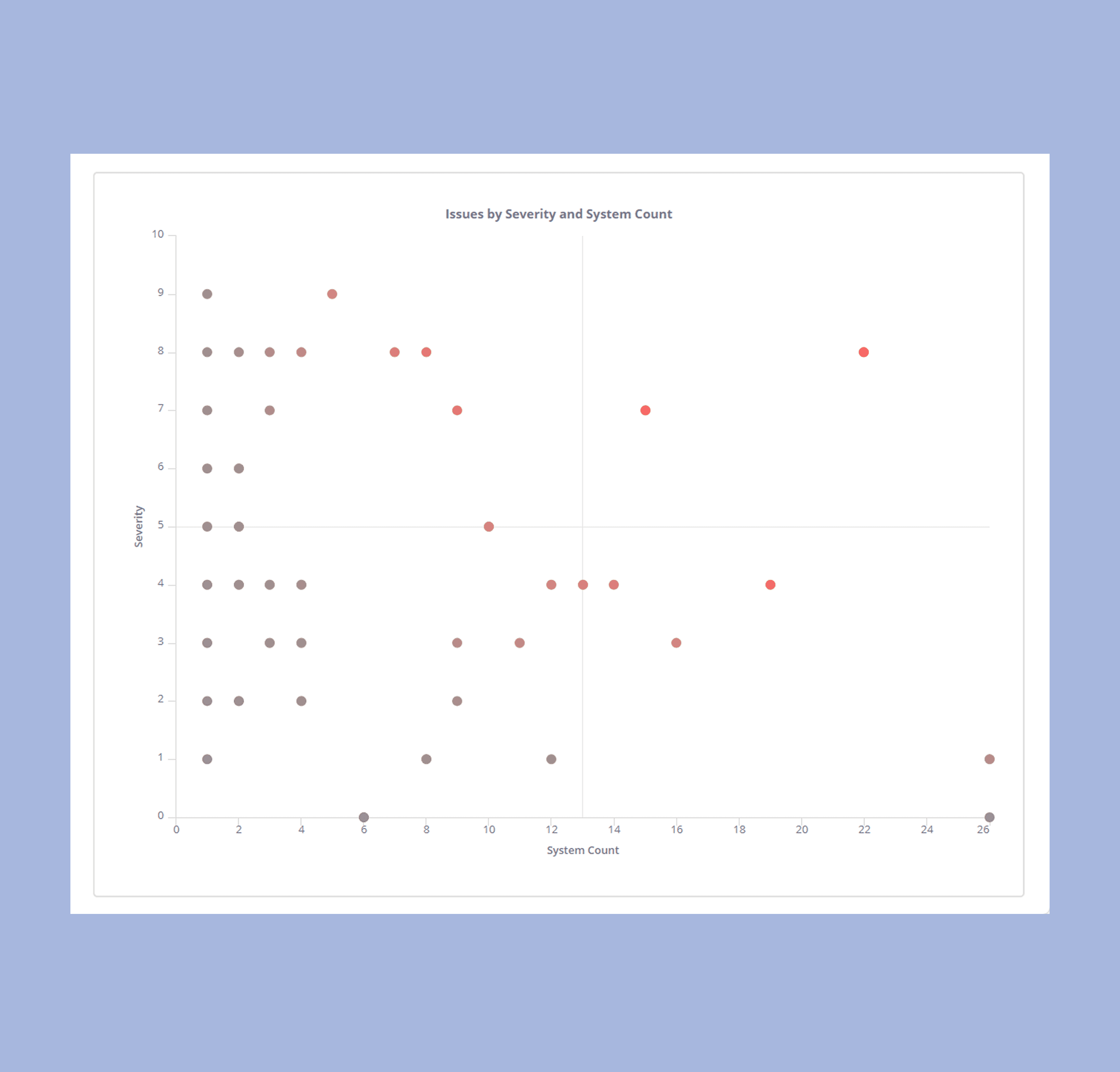
What was missing was a mid-level view — the ability to see impacted devices as a group, identify patterns, and understand likely causes without investigating machines one by one.
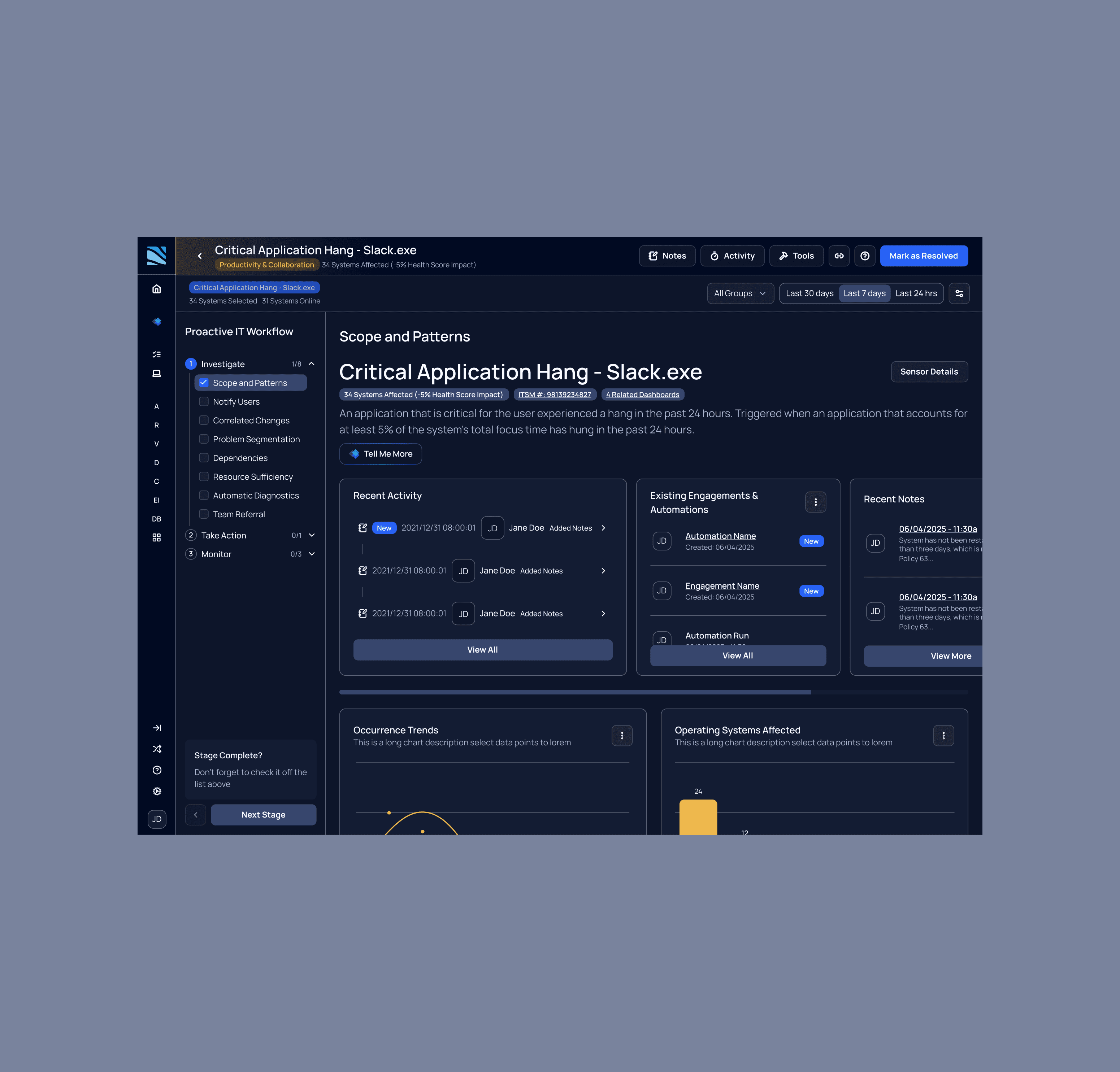
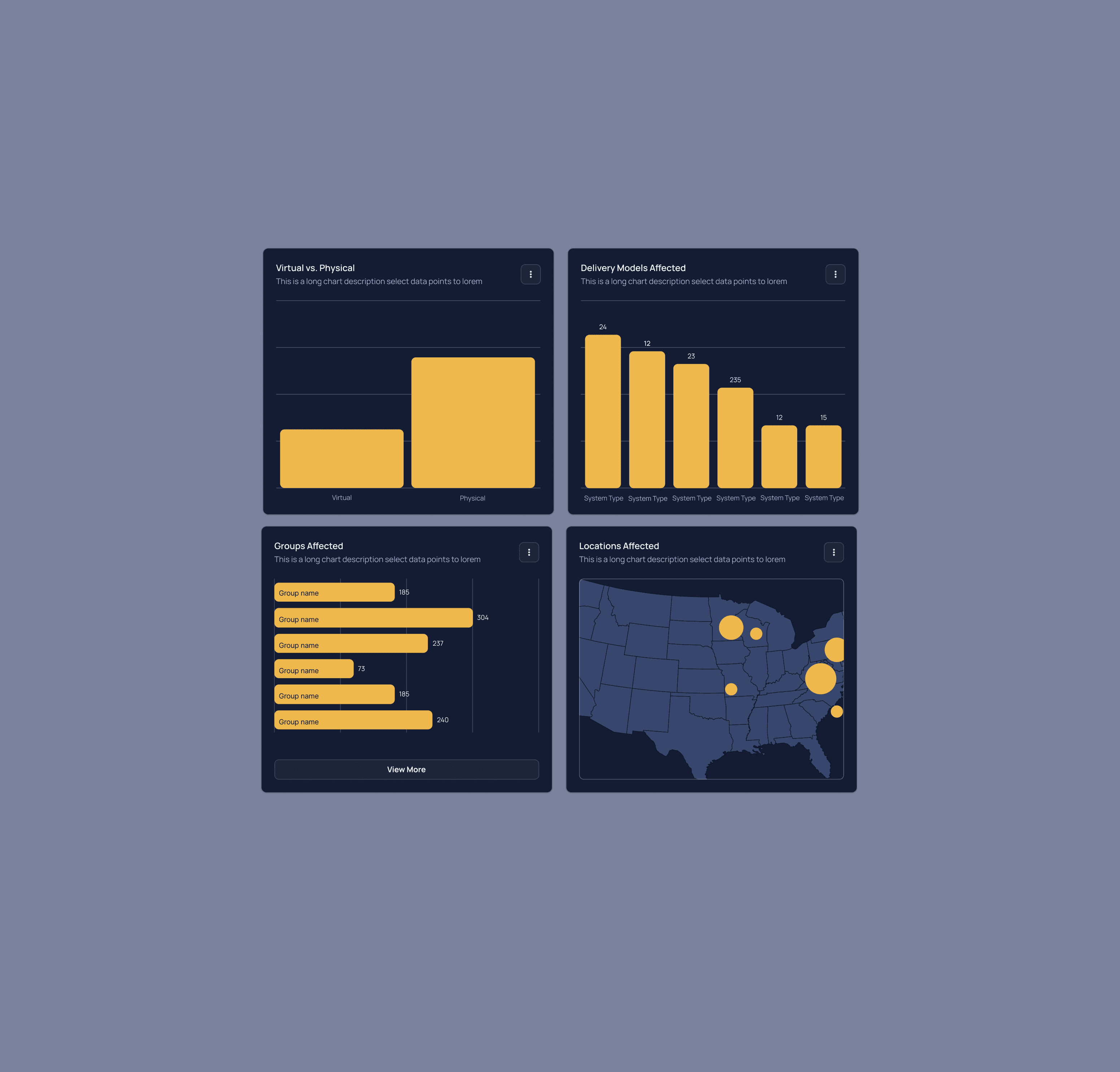
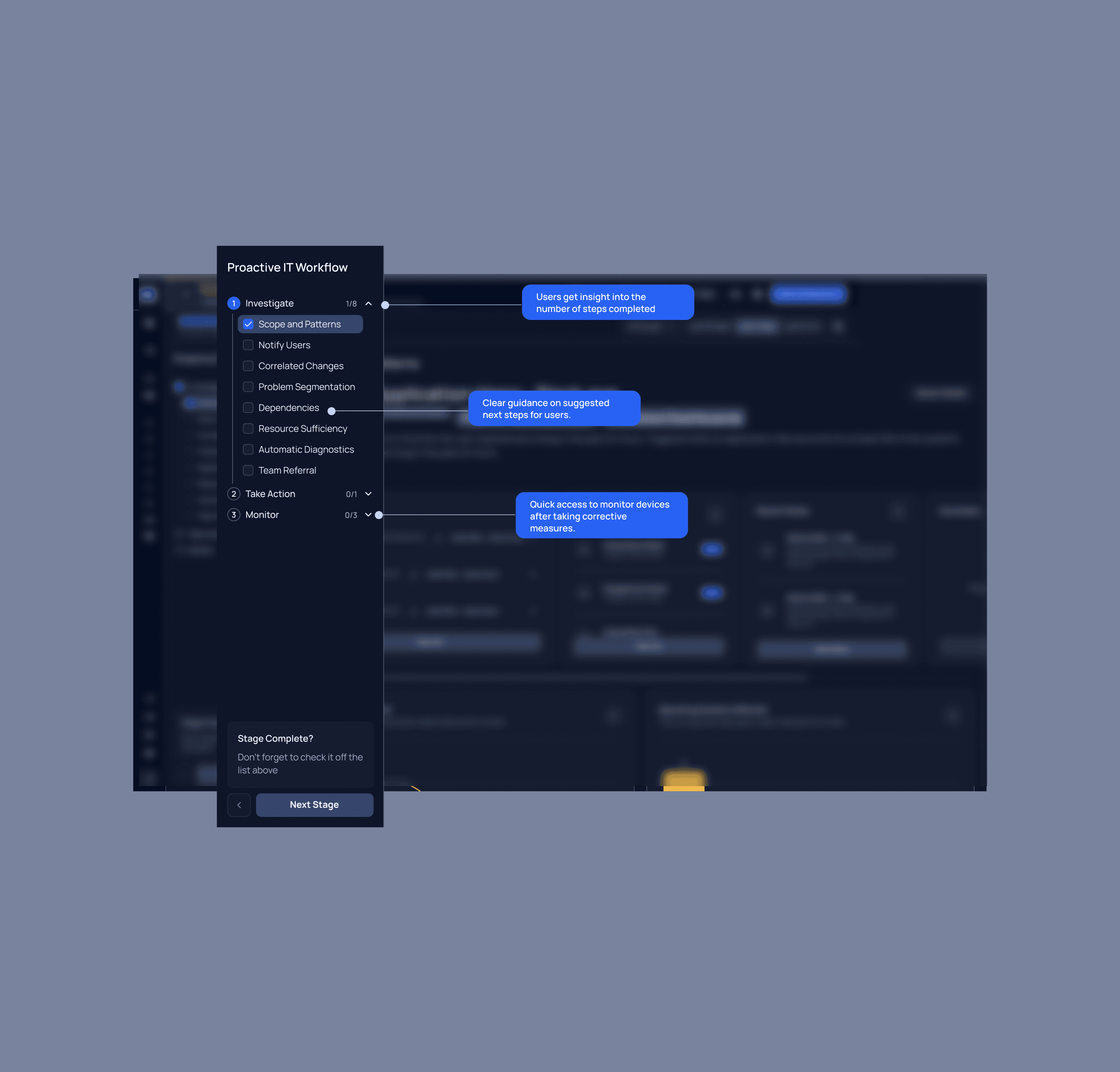
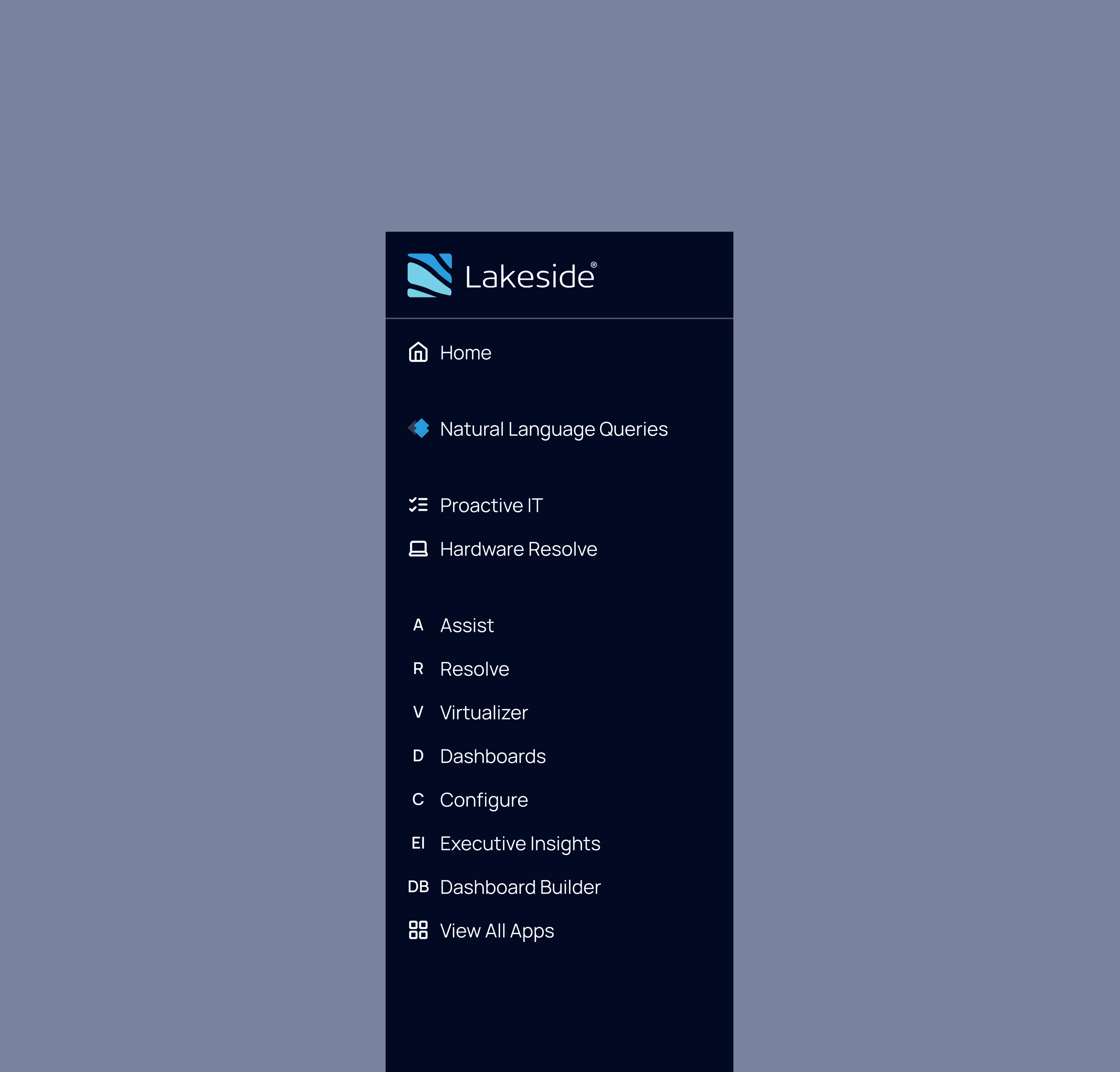
Rather than oversimplifying the domain, we designed a guided workflow layer that preserved flexibility while providing structure. This created continuity across complex investigations without constraining expert workflows.
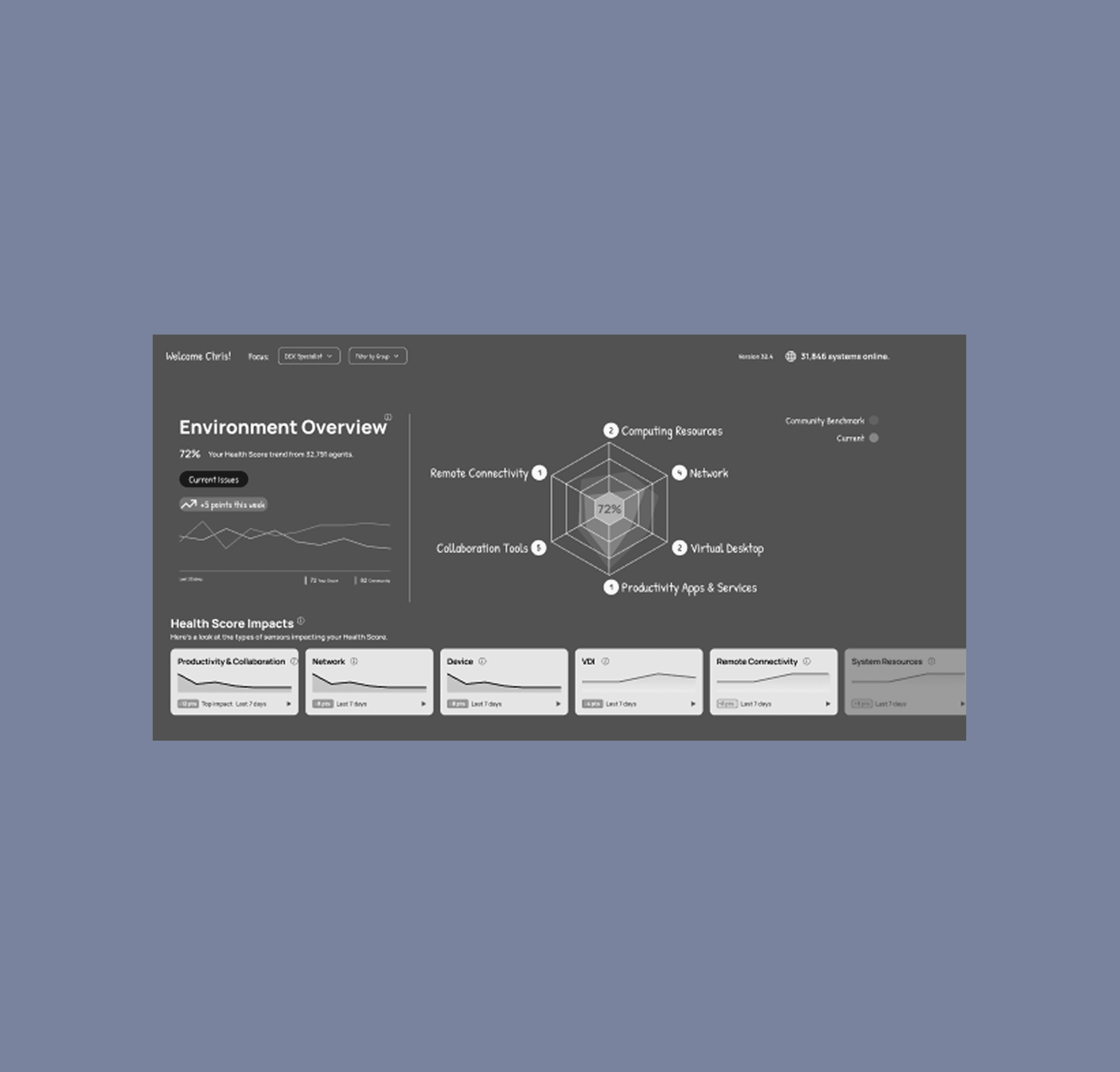
After many iterations we redesigned the Health Score experience to emphasize clarity, transparency, and control. This reframed the score from a mysterious metric into a decision-support tool users could trust and understand.
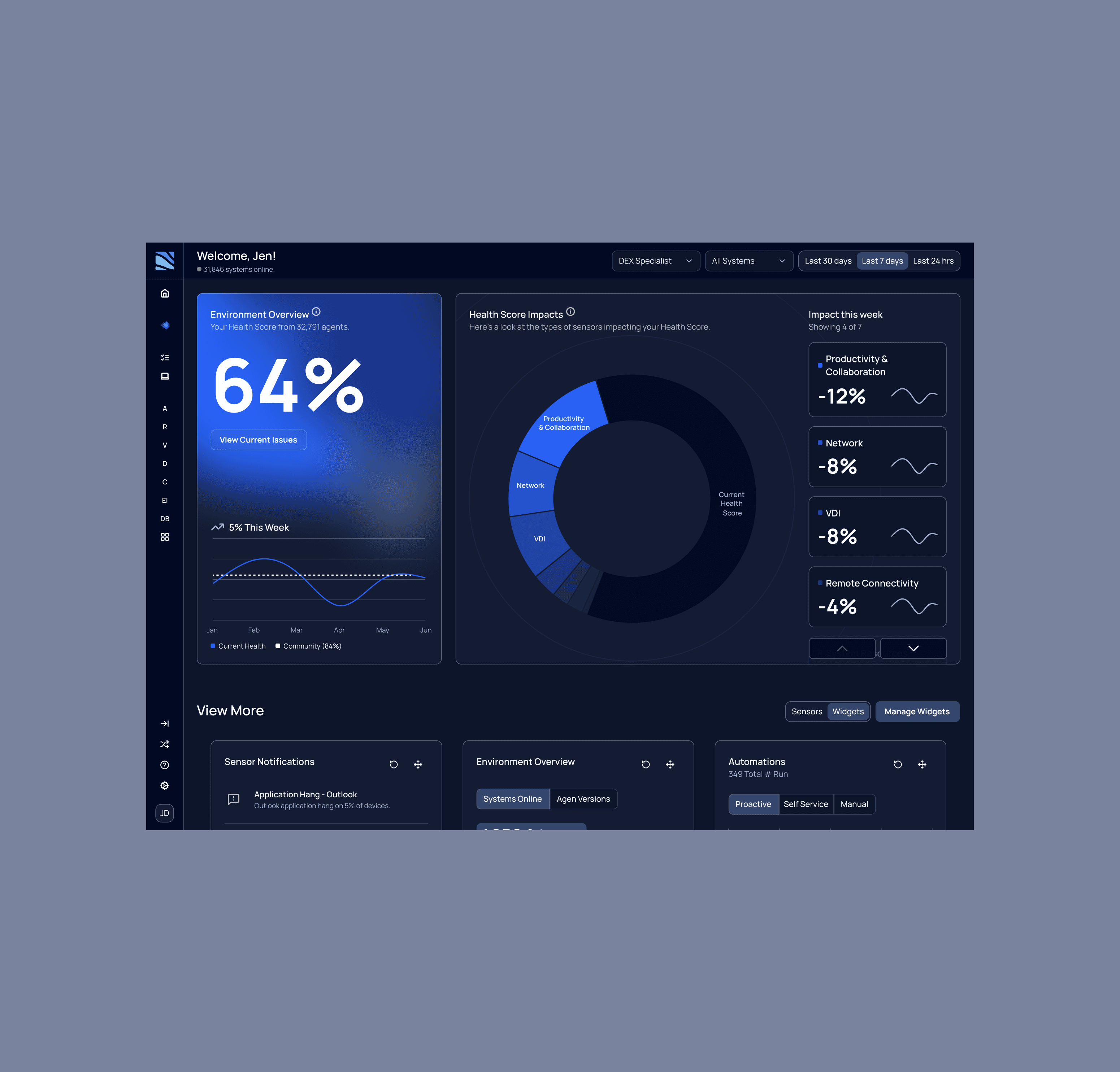
What We Included
01
Clarity
Clear breakdowns factors affecting the health score
02
Visibility
Visibility into how actions impacted the score over time
03
Future customization
Foundations for future customization and user-defined thresholds