Industry

Insurance

Client

Insurance Co.

Services

Research + Visual

Date

September 2024
Bringing clarity to a fragmented insurance experience

Bringing clarity to a fragmented insurance experience

The Service Experience team owned post-issue servicing, claim resolution, and customer loyalty for a national insurance provider. While the team was responsible for some of the most critical agent to customer moments, the ecosystem supporting them had grown fragmented over time.

The organization knew change was needed — but lacked a unified view of the problems, a shared language to prioritize improvements, and a credible vision for what “great service” should look like at scale.

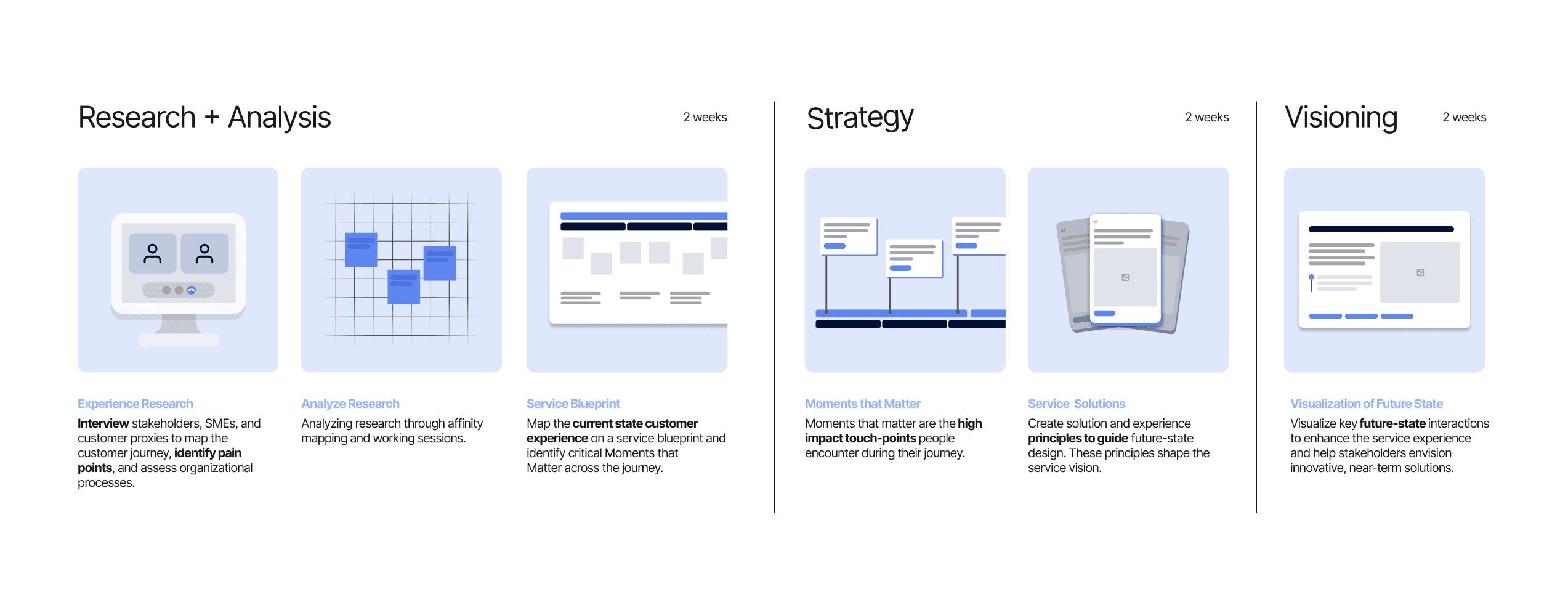
Method partnered with the Service Experience team in a multi-week engagement to clarify the current state, surface root problems, and create a future-facing vision that could align stakeholders, guide investment, and inspire confidence.
Rather than jumping to solutions, our goal was to answer three foundational questions:

Questions

01

Where does the servicing experience break down for customers and agents today?

02

What systemic barriers prevent proactive, high-quality service?

03

How might the organization evolve toward a more intentional, human-centered service model without disrupting regulatory and operational realities?

To ground the vision in reality and empathy, we conducted stakeholder interviews, service call shadowing, workflow analysis, and tool reviews across the servicing ecosystem.
What we found there was…

What we found there was…

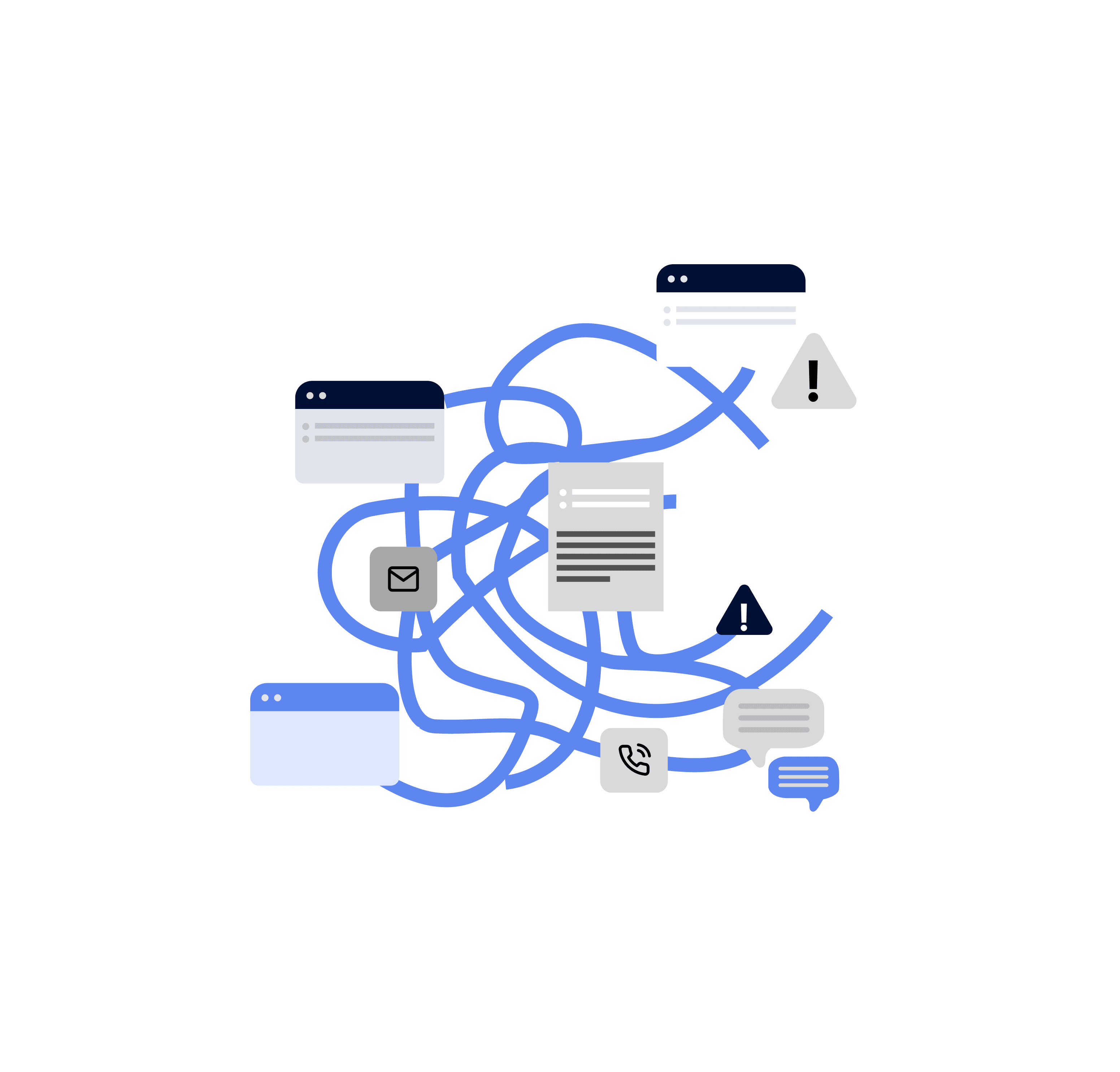
Unnecessary friction across systems and processes. Simple customer requests often required navigating multiple systems, re-entering information, or tracking down context from previous interactions.

Aspirations to deliver a premium, relationship-driven customer experience. However, the way the service team was incentivized, trained and evaluated reinforced speed and compliance over ownership and empathy. The system unintentionally discouraged thoughtfulness, in favor of task completion.
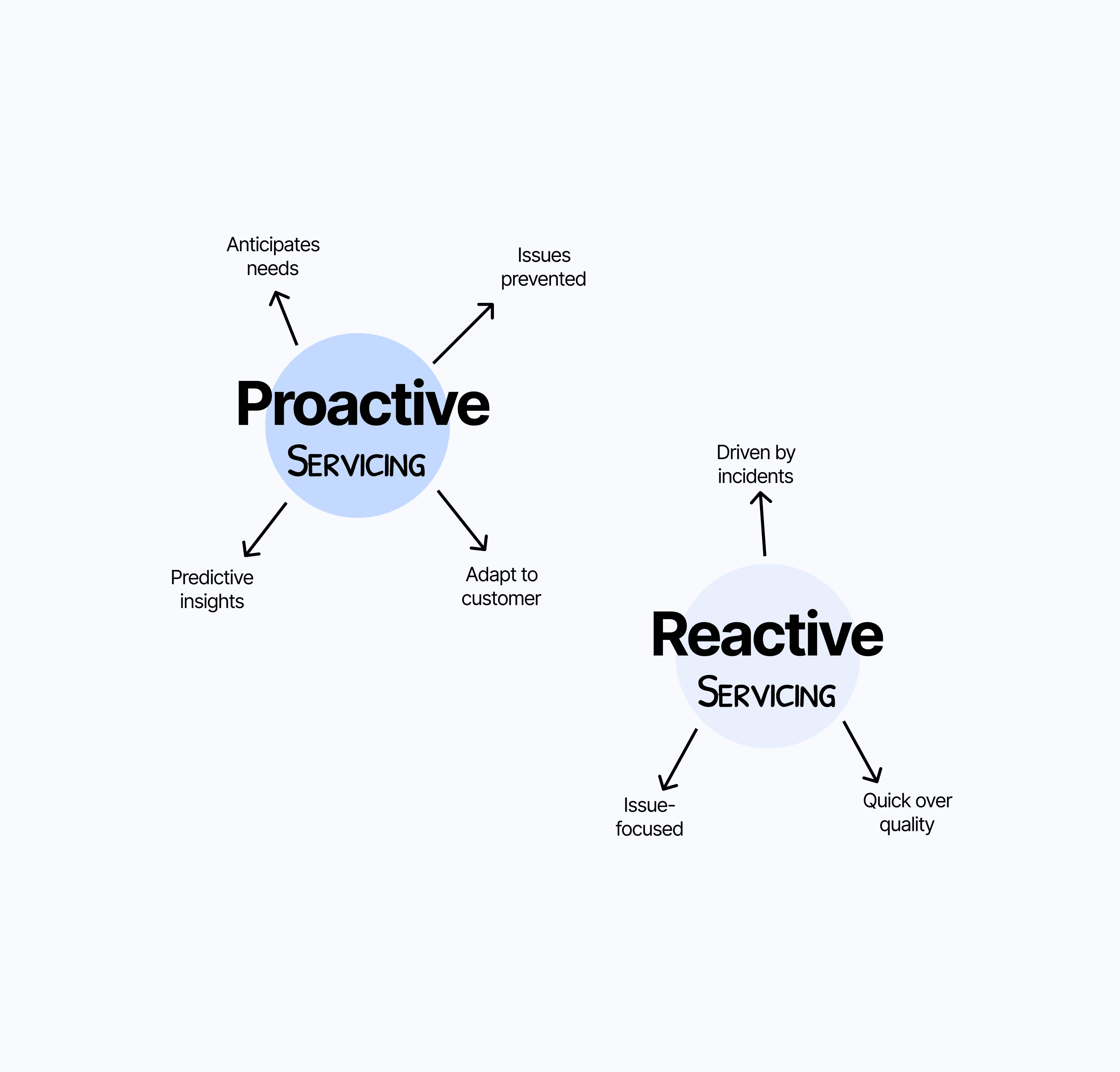
Reactive rather than proactive servicing. Processes were optimized to respond to regulatory requirements or inbound customer requests, leaving little room for anticipation, continuity, or proactive care.

Impact

01

Missed opportunities to prevent issues before escalation.

02

Limited ability to cross-sell, retain, or deepen customer relationships.

03

Fragmented ownership across handoffs.

We aligned stakeholders on a shared understanding of the problems.

We aligned stakeholders on a shared understanding of the problems.

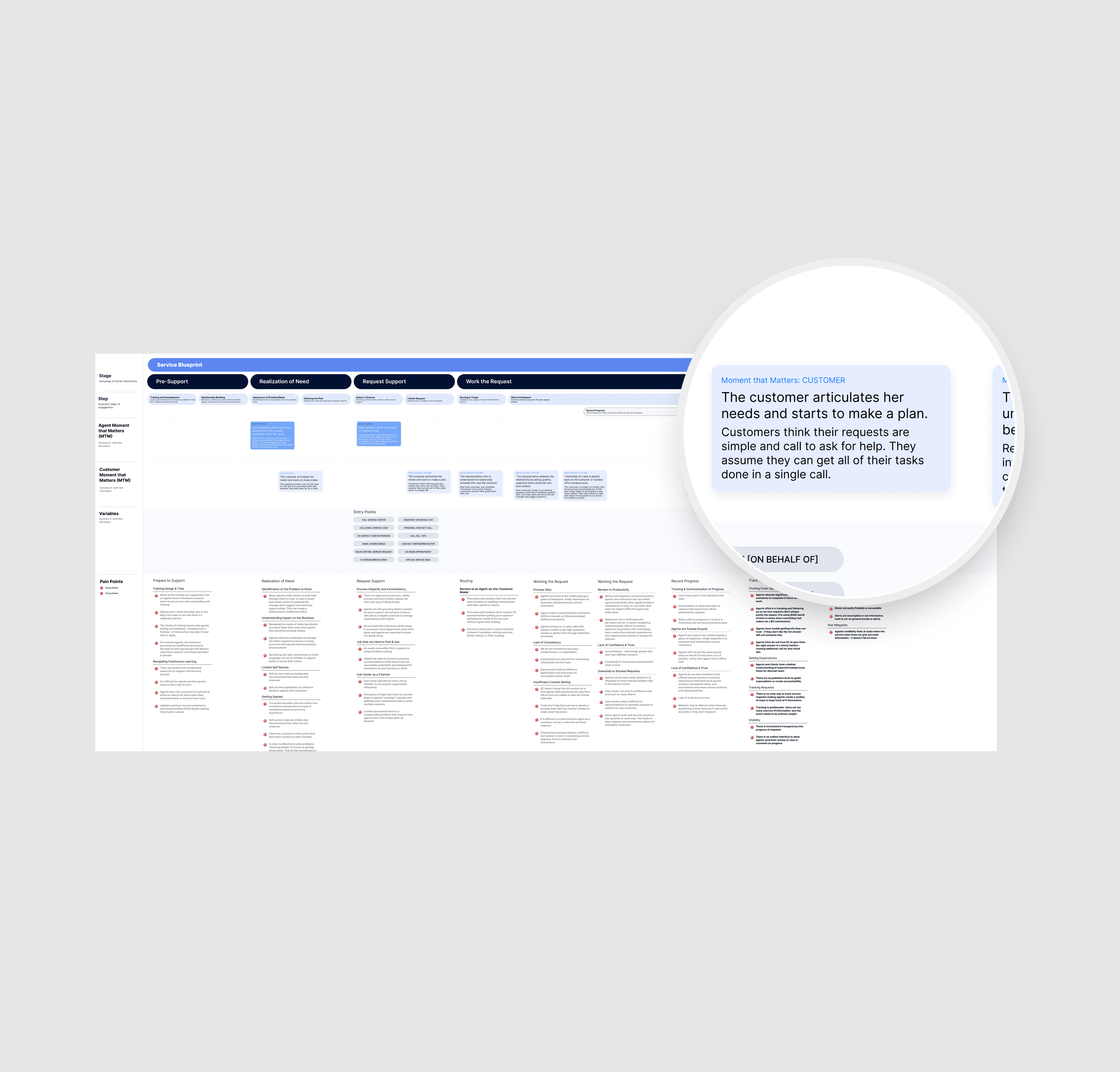
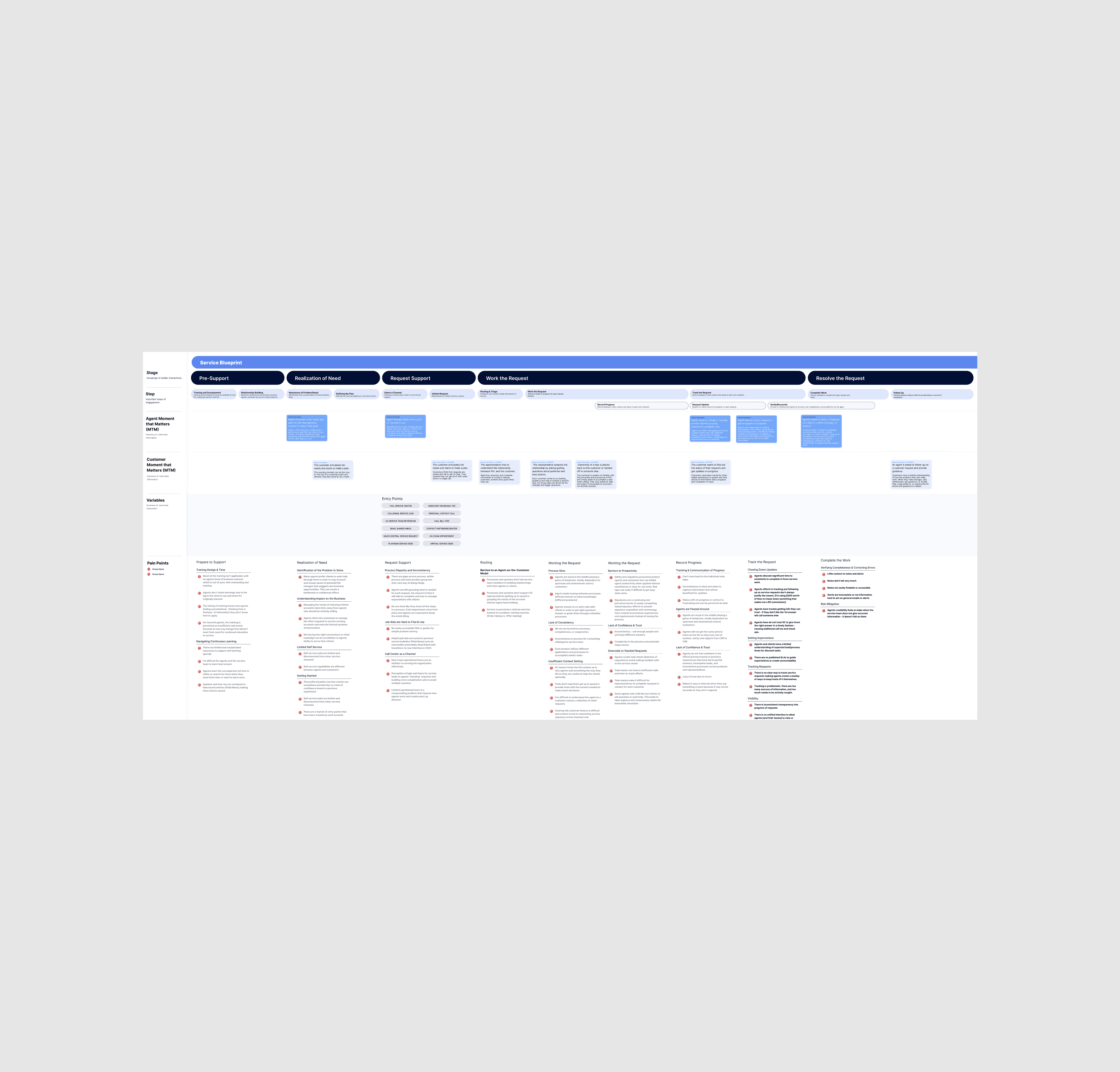
To align stakeholders around a shared understanding of the problems, we synthesized research into a living service blueprint — an end-to-end view of the people, processes, tools, and handoffs required to serve customers effectively.

This service blueprint became a decision-making tool rather than a static deliverable, allowing leaders to reason about tradeoffs, dependencies, and sequencing of change.

This service blueprint became a decision-making tool rather than a static deliverable, allowing leaders to reason about tradeoffs, dependencies, and sequencing of change.

This service blueprint became a decision-making tool rather than a static deliverable, allowing leaders to reason about tradeoffs, dependencies, and sequencing of change.

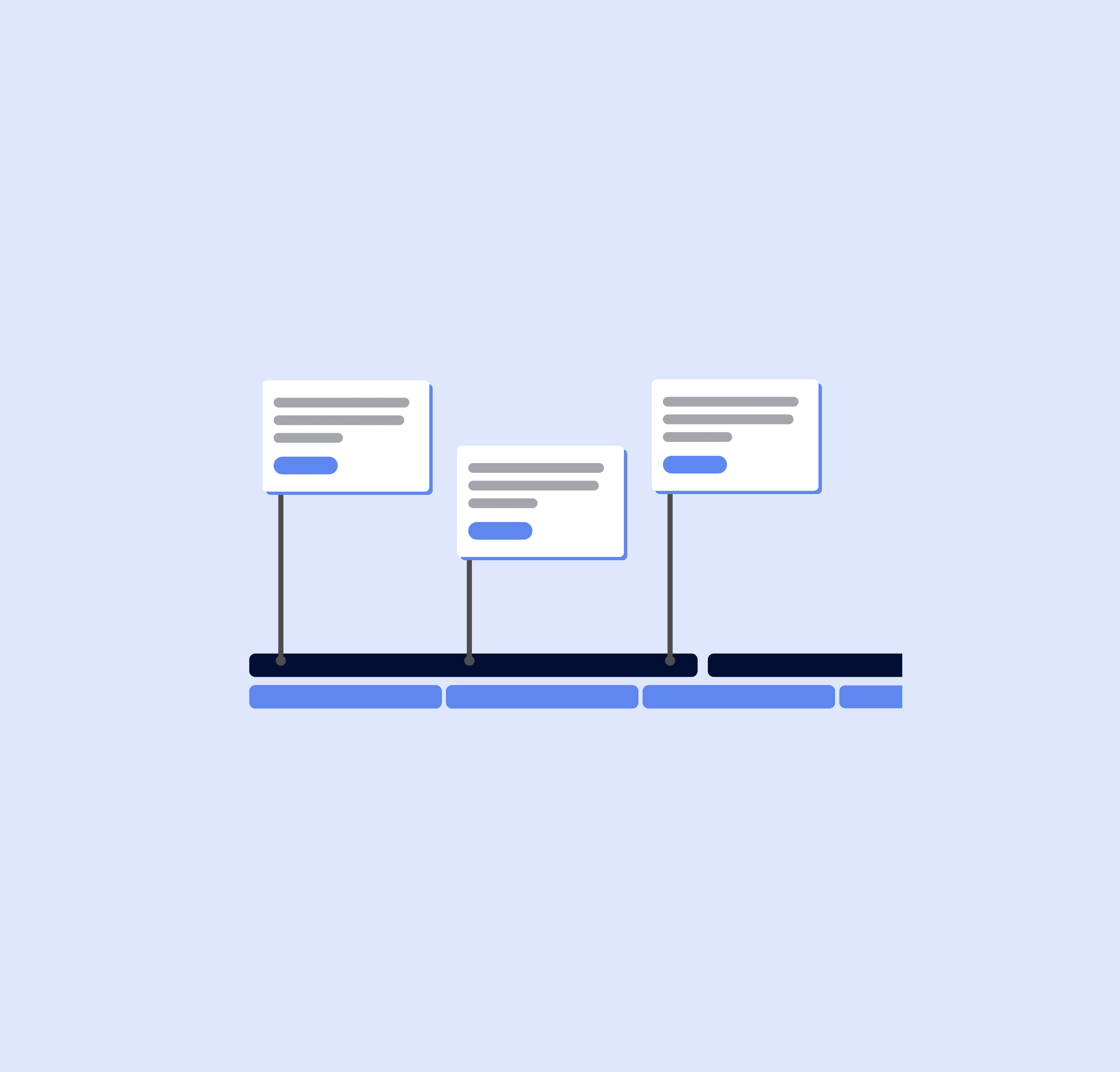
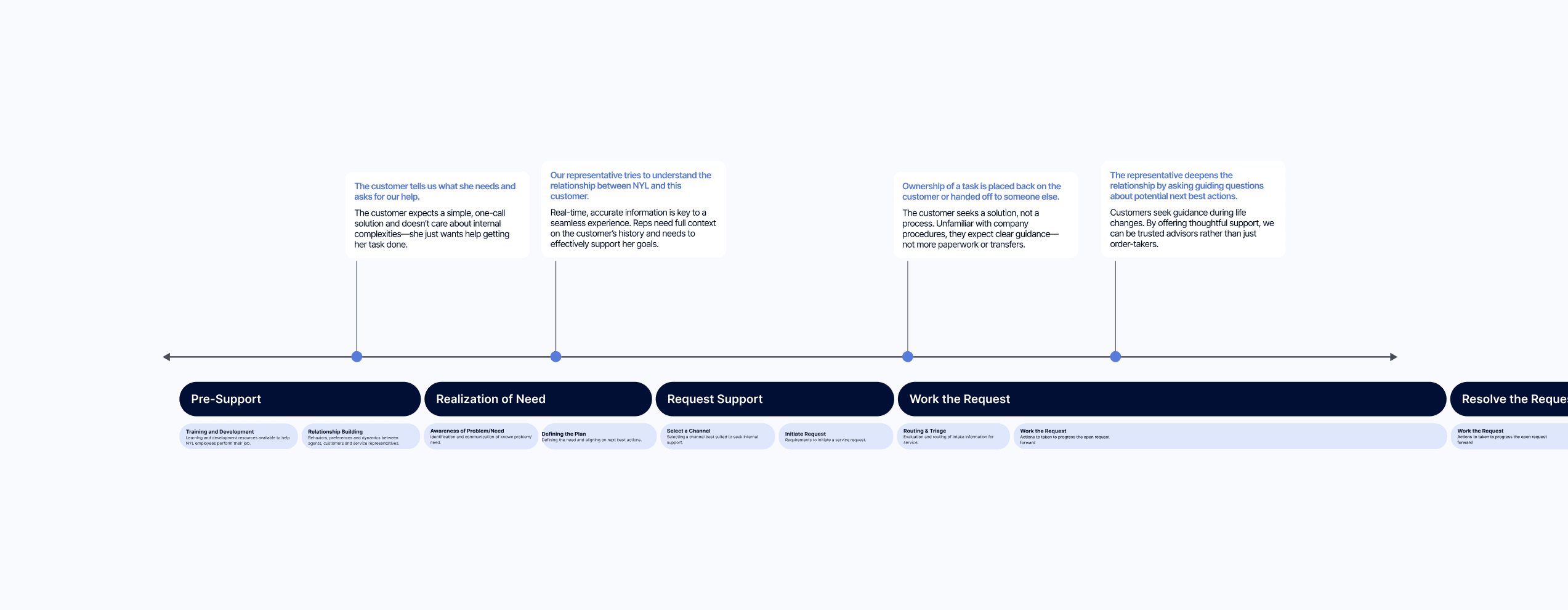
Creating key "Moments that Matter" ensure focus and impact.

Creating key "Moments that Matter" ensure focus and impact.

Within the service journey, we identified high-impact touch points where quality of experience influenced customer trust, loyalty, and resolution outcomes.

These moments were often characterized by emotional vulnerability, confusion, or operational complexity.

This focused investment, prioritized impactful improvements and aligned teams around shared experience outcomes.

This focused investment, prioritized impactful improvements and aligned teams around shared experience outcomes.

This focused investment, prioritized impactful improvements and aligned teams around shared experience outcomes.

Experience principles aligned teams on shared heuristics for evaluating future investments.

Experience principles aligned teams on shared heuristics for evaluating future investments.

Given the scale and complexity of the organization, prescribing specific solutions would have limited long-term usefulness. Instead, we developed a set of experience principles to guide decision-making across teams, tools, and initiatives.

Swipe to view

Rather than dictating features, the principles reinforced behaviors and system-level intent.

Rather than dictating features, the principles reinforced behaviors and system-level intent.

Rather than dictating features, the principles reinforced behaviors and system-level intent.

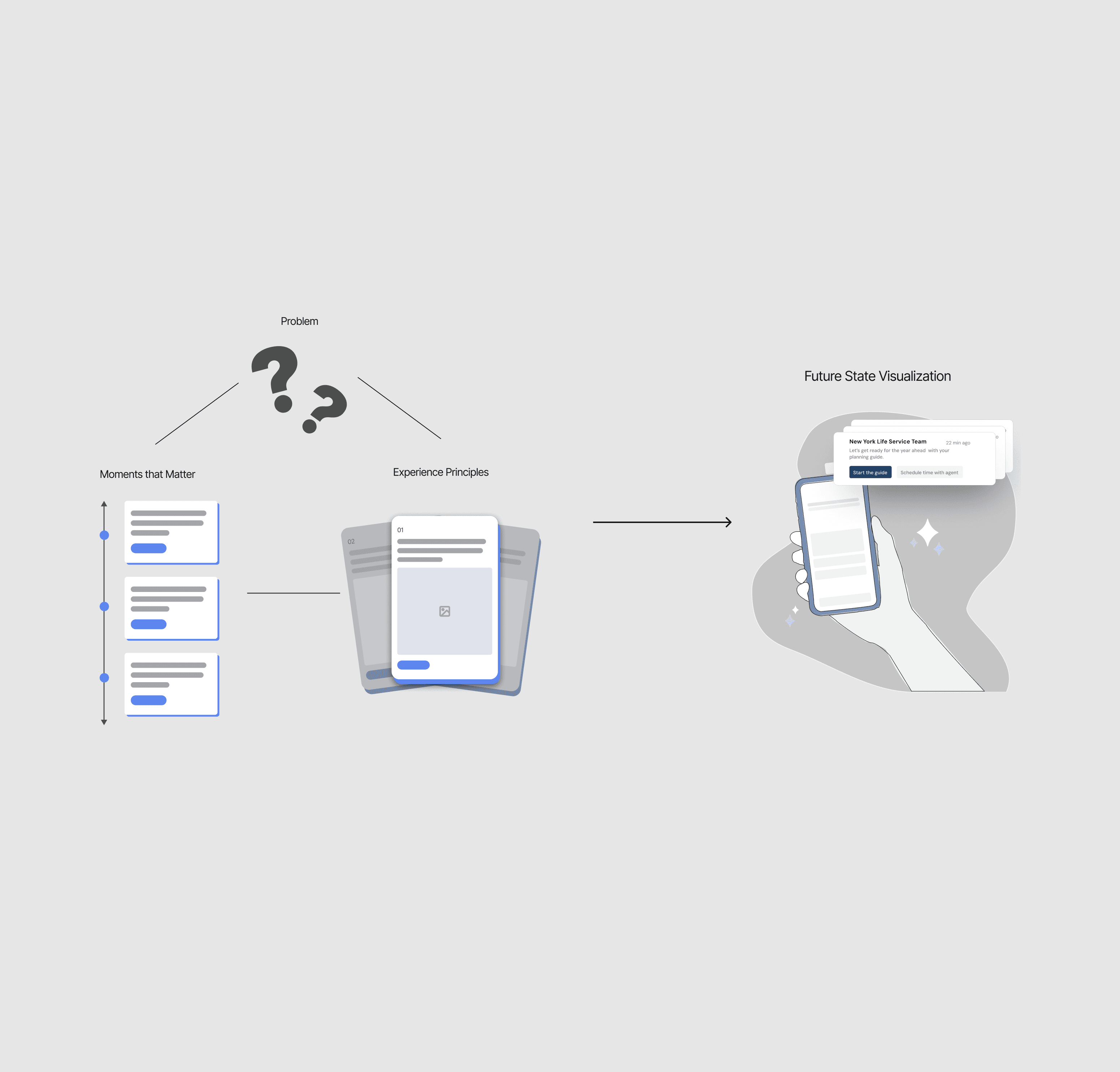
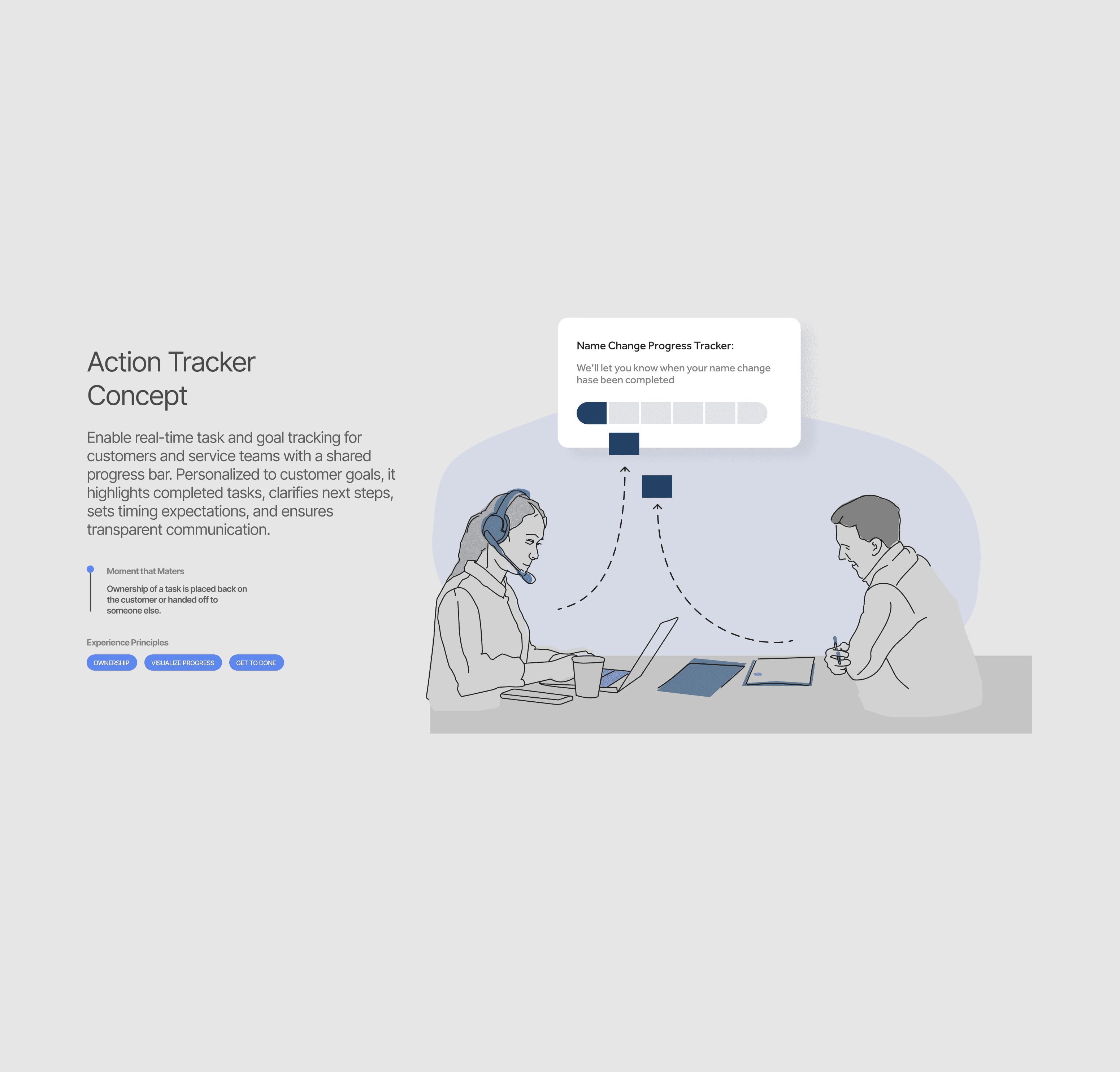
Artifacts we created were applied in future-state visualizations that demonstrated how these tools could be applied to real problem areas across the experience.

Artifacts we created were applied in future-state visualizations that demonstrated how these tools could be applied to real problem areas across the experience.

Rather than attempting to solve everything at once, our work established a durable foundation for transformation.

Rather than attempting to solve everything at once, our work established a durable foundation for transformation.

This engagement demonstrated the realities of driving innovation within a highly regulated, operationally complex industry.

While not every systemic issue could be immediately addressed, the team now operates with:

A shared understanding of the ecosystem
A prioritized view of experience leverage points
A guiding set of principles for future decision-making
A credible vision to anchor ongoing transformation

This foundation continues to shape how the organization approaches service innovation and experience strategy.